Ultimate Guide to Programmable and Smart Thermostats
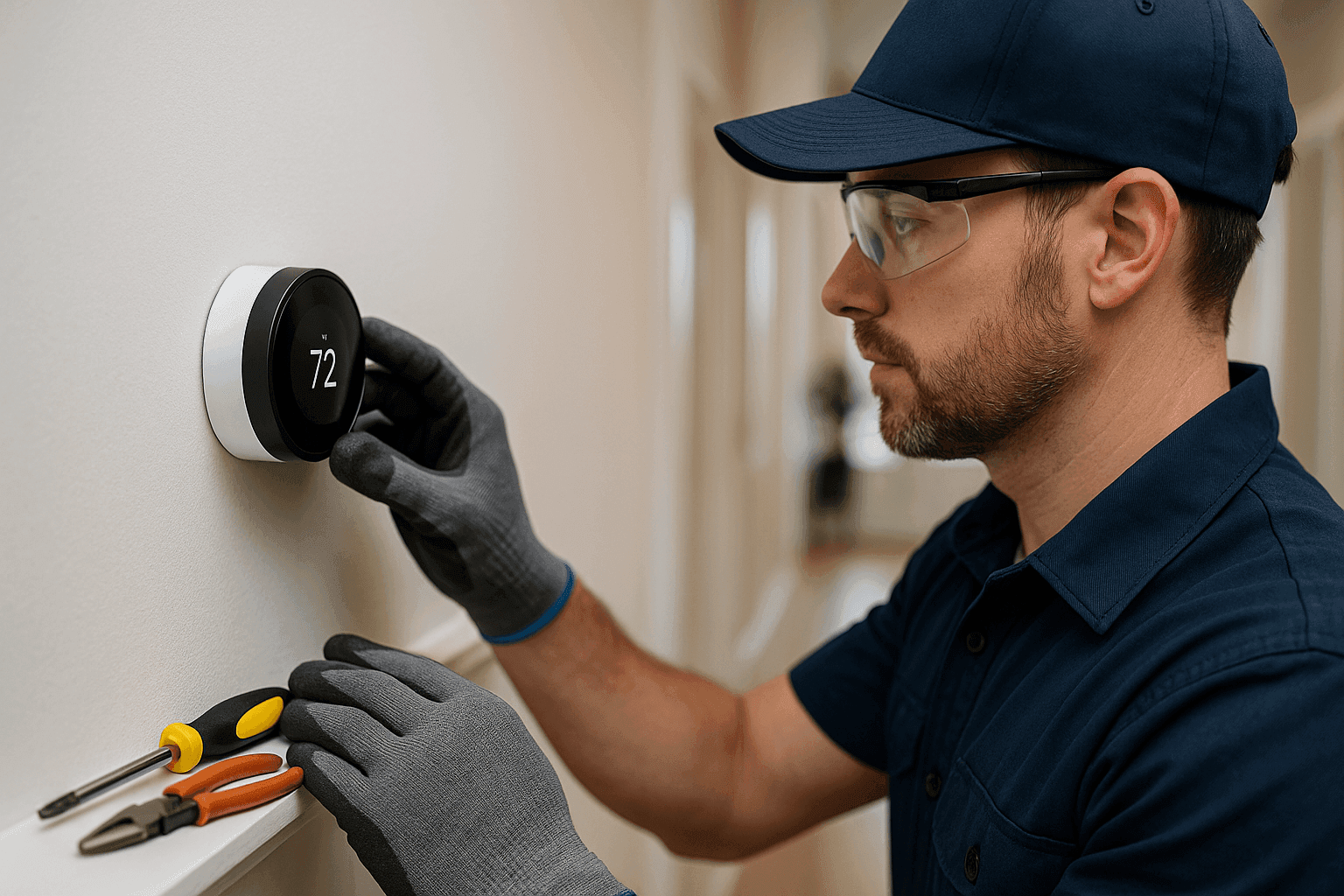
Is your home’s comfort running on autopilot—or stuck in the past? If you’re still turning the dial up and down all day, you’re not alone. But with utility rates rising and seasons growing less predictable, the right thermostat can make a real difference.
At Aldo Heating, Cooling & Air, we hear it all the time: “Can a new thermostat really save that much?” The answer—backed by years of real-world emergency hvac calls and modern tech—is a resounding yes. Let’s break down what’s possible, and how you can make your home smarter, safer, and more efficient.
Types of Thermostats
Choosing a thermostat is like picking the right gear for a road trip. The old-school manual knob gets you there, but smart navigation can save miles and money. Here’s what’s available, and what sets each apart:
Manual Thermostats
- Analog or digital dials
- No scheduling—just set your preferred temp
- Simple, but easy to forget adjustments
Programmable Thermostats
- Set daily or weekly temperature schedules
- Automatically adjusts when you’re asleep, at work, or away
- Common types: 5-2 (weekday/weekend), 5-1-1 (weekdays/Sat/Sun), 7-day (fully customizable)
- Helps avoid heating or cooling empty rooms
Smart Thermostats
- Connect to Wi-Fi—control from your phone, tablet, or voice assistant
- Learn your routines or react to your location (geofencing)
- Track energy use and suggest savings
- Integrate with other smart home devices, like air scrubbers or whole-house fans
- Some models offer maintenance reminders, IAQ (indoor air quality) tracking, and filter alerts
⚡ Feature Comparison: Programmable vs. Smart
- Setup: Programmable—set a schedule; Smart—set once, adapts over time
- Remote Control: Programmable—no; Smart—yes, from anywhere
- Energy Reports: Programmable—rare; Smart—often included
- Integration: Programmable—standalone; Smart—connects with other home tech
- Learning Ability: Programmable—static; Smart—dynamic, self-adjusting
How Smart Thermostats Work
Ever wish your home could “think” for itself? Smart thermostats make it possible. They’re like the conductor of an orchestra, tuning every room for harmony and efficiency.
- Sensors monitor temperature, humidity, and sometimes even occupancy.
- Algorithms learn when you come and go, adjusting comfort automatically.
- Connectivity allows you to check or change settings from anywhere—at work, on vacation, or stuck in traffic.
- Voice Control works with platforms like Alexa or Google Assistant for hands-free adjustments.
- Integration with emergency hvac alerts, filter change reminders, and even local weather forecasts.
Smart thermostats can also help spot issues early. If your system runs longer than usual, you might get a nudge to check for HVAC Repair near you—before a minor problem becomes an emergency.
Installation & Setup Tips
You don’t need to be a tech wizard to upgrade your thermostat, but a few pointers will smooth the process.
✅ Quick Safety Checklist
- Turn off power to your HVAC system at the breaker before starting.
- Read the manufacturer’s instructions carefully.
- Take a photo of your old wiring before disconnecting—color codes can vary.
- Only use UL-listed devices and follow local electrical codes (see National Fire Protection Association guidelines).
- If you run into unexpected wiring (like high-voltage systems), stop and call a pro.
DIY or Call a Pro?
A basic programmable thermostat usually fits a standard wiring setup. With a screwdriver and patience, most handy homeowners can manage. But when it comes to smart thermostats, things get a bit more complex:
- C-wire (common wire): Smart models often need extra power. If your system doesn’t have a C-wire, you may need an adapter or professional installation.
- Multiple zones or advanced systems: Modern homes with multi-stage HVAC, heat pumps, or geothermal may require expert wiring.
- Integration with IAQ, dehumidifiers, or generators: For these, professional setup ensures everything “talks” together seamlessly.
Aldo Heating, Cooling & Air’s technicians can handle any scenario—day or night. Our 24 hour emergency service means help is always close by.
Step-by-Step Setup
- Cut power to your HVAC system.
- Remove old thermostat and label wires.
- Mount the new base plate.
- Connect wires as per instructions.
- Secure the thermostat, restore power.
- Follow prompts for Wi-Fi setup and scheduling.
For smart thermostats, download the app and follow the guided setup. Many will walk you through connecting to your home network and linking with other devices.
Troubleshooting Common Issues
Sometimes, even the smoothest upgrade hits a bump. Here’s what to check if things don’t go as planned:
- Thermostat won’t power on: Check wiring, especially the C-wire. Replace batteries if needed.
- HVAC doesn’t respond: Double-check wire connections and settings. Ensure the system breakers are on.
- Wi-Fi not connecting: Restart your router and thermostat. Make sure your network is compatible (2.4 GHz vs 5 GHz).
- Room temp feels off: Calibrate the thermostat, or move it away from heat sources, windows, or vents.
- System cycles on/off rapidly: This could be “short cycling”—a sign of wiring issues or incompatible equipment. Call a professional for diagnosis.
If you run into anything that feels unsafe—or your HVAC system stops working altogether—call for emergency hvac support right away.
Guidance for Homeowners: Upgrading with Confidence
Thinking about upgrading? Here’s how to make the smartest choice for your home, comfort, and budget.
- Assess compatibility: Check your HVAC system type (single-stage, multi-stage, heat pump, etc.).
- Decide on features: Do you want remote control, learning capabilities, or just a set-and-forget schedule?
- Consider household routines: If your schedule changes often, a smart thermostat’s adaptability pays off.
- Plan for future tech: If you’re interested in IAQ testing, whole-house fans, or generator integration, choose a model that can grow with your home.
Aldo Heating, Cooling & Air can walk you through options—explaining pros, cons, and real-world benefits without pushing unnecessary upgrades.
FAQ
Do programmable thermostats really save money?
Yes. The U.S. Department of Energy reports that setting back your thermostat 7°-10°F for 8 hours a day can save up to 10% a year on heating and cooling costs.
Are smart thermostats compatible with older HVAC systems?
Often, yes. Most work with systems from the past 20–30 years, but unique setups (especially older boilers or high-voltage systems) might need an adapter or pro installation.
How secure are smart thermostats?
Manufacturers use encrypted connections and regular firmware updates. As with any smart device, use strong passwords and keep software up to date.
Can I install a smart thermostat myself?
If you’re comfortable with basic wiring and your system has a C-wire, yes. For more complex systems, or if you’re unsure, it’s safer to call Aldo Heating, Cooling & Air.
Local & Seasonal Considerations 🌦️
- Extreme cold or heat: Smart scheduling is especially helpful during peak seasons, reducing strain on your system and keeping energy bills in check.
- Humidity swings: Some smart thermostats help control dehumidifiers or humidifiers for year-round comfort.
- Allergy season: Models that track indoor air quality can pair with air scrubbers or filters, keeping your home healthier.
- Power outages: If you have generator backup, choose a thermostat that reconnects automatically when power is restored.
The Bottom Line
Programmable and smart thermostats are more than gadgets—they’re keys to comfort, savings, and a healthier home. Whether you’re curious about features, ready to install, or facing a late-night emergency hvac issue, Aldo Heating, Cooling & Air is here to help.
From simple upgrades to advanced home integration, we’ve got your comfort covered—day or night.
Call Aldo Heating, Cooling & Air now — or reach us anytime at 877-748-4187 .